Latest DePIN AI News
View AI Projects
a year ago
Stratos Partners with MetaTrust Labs to Enhance Web3 Security
In a significant development for the Web3 ecosystem, Stratos has announced a partnership with MetaTrust Labs, a leading provider of Web3 AI security tools and code auditing services. This collaboration is set to enhance the security and resilience of Web3 applications by merging advanced AI-powered security measures with Stratos' decentralized storage solutions. The partnership aims to create a robust infrastructure that not only protects data but also ensures the reliability and efficiency of Web3 applications, a crucial aspect for developers and users alike.
MetaTrust Labs, which was incubated at Nanyang Technological University in Singapore, is recognized for its innovative approach to Web3 security. The company specializes in developing advanced AI solutions designed to assist developers and stakeholders in safeguarding their applications and smart contracts. This focus on security is essential in the rapidly evolving digital landscape, where vulnerabilities can lead to significant risks. By leveraging AI technologies, MetaTrust Labs aims to create safer and more efficient digital ecosystems that can withstand potential threats.
Stratos, known for its commitment to decentralized infrastructure solutions, plays a pivotal role in this partnership. The company provides a decentralized storage framework that supports high availability, scalability, and resilience for Web3 platforms. By integrating its decentralized storage solutions with MetaTrust Labs' AI-driven security tools, the partnership promises to deliver an unparalleled level of protection for code and data within Web3 applications. This collaboration not only enhances security confidence for developers but also contributes to the overall integrity of the Web3 space, paving the way for a more secure digital future.

a year ago
Connecting Builders: Events in Bangkok Focused on Data, AI, and Crypto
In a vibrant push towards innovation in the intersection of data, AI, and cryptocurrency, a group of builders is gearing up to engage with the community in Bangkok this month. They will be present at several key events, including the Filecoin FIL Dev Summit on November 11, Devcon from November 12 to 15, and Fluence’s DePIN Day on November 15. These gatherings are designed for builders, operators, and newcomers alike, providing a platform for networking and collaboration in the rapidly evolving Web3 landscape.
The focus of these events is to foster connections among those interested in decentralized technologies. Attendees can expect to engage in discussions around various topics such as decentralized storage, verifiable data, and identity management. The organizers are particularly keen on promoting their private Telegram group, Proof of Data, which serves as a collaborative space for individuals tackling challenges within the Web3 data ecosystem. This initiative aims to create a community where participants can share insights and solutions related to data availability and synthetic data.
As the Web3 ecosystem continues to grow, events like these are crucial for building relationships and sharing knowledge. By bringing together diverse stakeholders, from seasoned developers to curious learners, the gatherings in Bangkok promise to be a melting pot of ideas and innovations. Attendees are encouraged to connect with the team at DePIN Day for more information and to join the ongoing conversation in the Proof of Data community, ensuring that everyone has the opportunity to contribute to the future of decentralized technologies.
a year ago
Verida DAO Launches Private AI Grants Program
The Verida DAO has officially launched its inaugural Verida Private AI Grants Program, aimed at promoting innovation within the realms of Private AI and decentralized storage. This initiative is designed to support groundbreaking projects that leverage the Verida Private Data Bridge, which is set to expand its capabilities by integrating additional data connectors. By doing so, the program will empower developers using the Verida API to access a broader range of user data, ultimately leading to the creation of more sophisticated AI agents and applications.
The grants will be available from November 15th to February 15th, with a total grant pool valued at $30,000 in VDA tokens. The program features multiple tiers of funding, catering to various levels of project complexity. Tier 1 offers $500 for extending existing connectors, while Tier 2 provides $1,000 for basic connectors. For more advanced projects, Tier 3 awards $2,000 for high complexity connectors, and Tier 4 grants $3,500 for advanced connectors. This tiered approach encourages a wide range of innovative solutions within the decentralized storage ecosystem.
Interested participants can register their interest by filling out a designated form, which will be reviewed by the DAO team. Successful submissions will lead to further discussions about the proposed projects. The Verida DAO is enthusiastic about the potential contributions to the future of Private AI and looks forward to seeing innovative solutions that enhance the decentralized storage landscape. This initiative marks a significant step towards realizing Verida's long-term vision of unlocking data for diverse Private AI use cases.
a year ago
CUDOS Partners with ParallelAI to Enhance Decentralised AI Computing
CUDOS, a prominent player in sustainable and decentralised cloud computing, has recently forged a strategic partnership with ParallelAI, a pioneer in parallel processing solutions tailored for artificial intelligence. This collaboration aims to merge CUDOS's high-performance Ada Lovelace and Ampere GPUs with ParallelAI's Parahub GPU Middleware, thereby creating a decentralised AI compute environment that promises exceptional efficiency and scalability. By leveraging CUDOS's decentralised infrastructure, ParallelAI's $PAI ecosystem will gain access to robust and cost-effective GPU resources, enabling accelerated AI workloads that allow developers and enterprises to optimize GPU utilization while minimizing operational expenses.
The timing of this partnership is particularly significant as CUDOS continues to build on its recent token merger with ASI Alliance members, which include notable entities like Fetch.ai, SingularityNET, and Ocean Protocol. This strategic alignment further cements CUDOS's position within a globally recognized decentralised AI network. ParallelAI's upcoming launches of the Parilix Programming Language and PACT Automated Code Transformer are set to complement this partnership, simplifying GPU programming and enhancing the accessibility of parallel processing for developers, thus fostering innovation in the AI sector.
The collaboration between CUDOS and ParallelAI signifies a mutual dedication to promoting sustainable and accessible AI computing solutions. As the integration of their technologies advances, this partnership is poised to usher in a new era of decentralised, high-performance computing, ultimately redefining the landscape of artificial intelligence for developers and enterprises alike. With ParallelAI's ability to enhance compute efficiency by significantly reducing computation times, the synergy between these two companies is expected to empower a wide array of AI-driven projects and large-scale data analyses.
a year ago
Ideogram 2.0: A Game Changer in AI Image Generation
In the rapidly evolving landscape of AI image generation, Ideogram 2.0 emerges as a standout platform, offering an impressive blend of photorealism and user-friendly features. This latest version has been designed with accessibility in mind, allowing users of all skill levels to create stunning images without the need for coding expertise. Its free-to-try model invites experimentation, while the introduction of API access in beta opens new avenues for developers looking to integrate advanced AI capabilities into their projects. The standout feature, however, is its innovative "magic prompts," which provide AI-generated suggestions that enhance the creative process, making it a compelling choice for both casual users and professionals alike.
My initial experience with Ideogram 2.0 was nothing short of impressive. Using a simple prompt for a still-life image, I received four beautifully rendered images that showcased the platform's ability to cater to specific visual needs. The addition of the "magic prompts" feature not only enriched the results but also demonstrated the platform's versatility. Moreover, Ideogram 2.0 excels in creating memes and deep fakes, a unique aspect that sets it apart from competitors. While the results can be strikingly realistic, users are advised to approach this feature with caution, considering the ethical implications of generating such content.
Beyond its core functionalities, Ideogram 2.0 addresses common issues faced by other AI generators, such as poor text quality and lack of color control. With accurate fonts and the ability to adhere to specific color palettes, it becomes an invaluable tool for designers and marketers. The premium version also offers AI upscaling, enhancing image resolution for professional use. While the API requires a minimum deposit, the overall value provided by Ideogram 2.0 makes it a worthy investment for those serious about leveraging AI in their visual projects. In a crowded market, Ideogram 2.0 is undoubtedly a must-try for anyone interested in AI image generation.
a year ago
Nicholas Zaldastani Discusses Blockchain's Impact on Data Ownership and Security
In a recent episode of Hashing It Out, Nicholas Zaldastani, the chairman and co-founder of CESS, discussed the transformative power of blockchain technology in the realm of data ownership and security. Reflecting on his tenure at Oracle in the late 1980s, Zaldastani noted the exponential growth in the value of data, which has become a cornerstone of the global economy. As digital information increasingly dictates various aspects of life, the urgency surrounding data privacy and security has intensified, prompting discussions on decentralized storage solutions that empower users to retain control over their information.
Central to Zaldastani's insights is the concept of data sovereignty, which advocates for individuals' rights to manage their own data. He criticized traditional centralized storage systems for their vulnerabilities, often exposing data to unauthorized access and misuse. In contrast, decentralized networks like CESS offer innovative solutions by distributing data across multiple nodes, thereby enhancing security. Zaldastani explained that by breaking data into encrypted segments and replicating them across various locations, the risk of data breaches is significantly reduced, as accessing a single node yields only a fraction of the information.
The implications of decentralized data storage extend beyond individual privacy, influencing sectors such as non-fungible tokens (NFTs) and artificial intelligence (AI). As blockchain technology continues to evolve, it holds the potential to redefine how data is managed and secured, ensuring that users maintain ownership and control. The podcast episode serves as a vital resource for understanding these emerging trends and the future of data in a digital-first world.
a year ago
Liner Partners with Theta EdgeCloud to Enhance AI Search Solutions
Theta Labs has announced Liner as its latest enterprise customer for Theta EdgeCloud, marking a significant milestone in the realm of generative AI-powered search solutions. Liner, recognized as a global leader in this field and ranked among the Top 10 by Andreessen Horowitz, aims to leverage Theta EdgeCloud to enhance its AI search engine for over 10 million students and researchers. Since the launch of EdgeCloud in June, Theta has gained traction in academic institutions across the U.S. and Korea, with notable collaborations including the University of Oregon and Yonsei University, all focused on advancing AI research.
Recently, Liner secured $29 million in Series B funding, led by INTERVEST and Atinum Investment, with contributions from Samsung Venture Investment and others. This funding solidifies Liner's position in specialized information retrieval and supports its rapid expansion in the U.S. market, which boasts over 10 million registered users from prestigious universities. According to Liner's CEO, Luke Jinu Kim, two-thirds of their paying users are from U.S. academia, highlighting the company's strong foothold in this sector. Liner's recognition on the 2024 Emerging AI+X Top 100 list further underscores its growth potential and innovative approach to AI.
Liner's AI search engine integrates advanced models such as GPT-4 and its proprietary Liner 7B model, designed for hyper-personalized information retrieval. By employing advanced inference techniques, Liner delivers precise answers from trusted academic sources, catering to the needs of students and researchers. The partnership with Theta will enhance Liner's AI inference capabilities, utilizing EdgeCloud's decentralized GPU resources for faster and more efficient search results. This collaboration not only strengthens Liner's offerings but also aligns with Theta's commitment to providing high-quality infrastructure for academic research.
a year ago
Nvidia Surpasses Apple: A New Era for AI and Cryptocurrency
Nvidia has achieved a historic milestone by surpassing Apple as the world’s most valuable company, reaching a market capitalization of $3.43 trillion. This achievement followed a 2.9% increase in the company’s share price, pushing it ahead of Apple’s $3.38 trillion valuation. Nvidia's dominance in artificial intelligence chip manufacturing has been a key factor in this growth, with its products becoming essential for major tech companies' AI systems. Since the end of 2022, Nvidia's stock value has skyrocketed by over 850%, driven by strong demand for its AI chips, with analysts projecting significant earnings growth for the company in the coming years.
The success of Nvidia has had a ripple effect on the cryptocurrency market, particularly for AI-focused digital currencies. NEAR Protocol, designed for AI applications, saw a 5.46% increase, while Internet Computer experienced a 4.99% rise. Bittensor, a decentralized AI platform, recorded a substantial 14.65% increase. These gains reflect growing investor interest in cryptocurrencies associated with artificial intelligence technology. The Artificial Superintelligence Alliance token and Injective also joined the rally, indicating a broader market participation in AI-related assets.
As Nvidia continues to influence the market, it now represents 7% of the S&P 500 Index’s weight, contributing significantly to the index's gains this year. However, the company faces regulatory scrutiny regarding its planned $700 million acquisition of Israeli AI startup Run Labs. This regulatory challenge adds a layer of caution to Nvidia's growth narrative. The simultaneous rise in Nvidia’s stock price and AI cryptocurrency values suggests a market-wide recognition of AI's growing importance, with investors actively seeking exposure to this technology through various investment vehicles, including both traditional stocks and cryptocurrencies.
a year ago
Theta EdgeCloud Enhances Payment Options with TFUEL Support
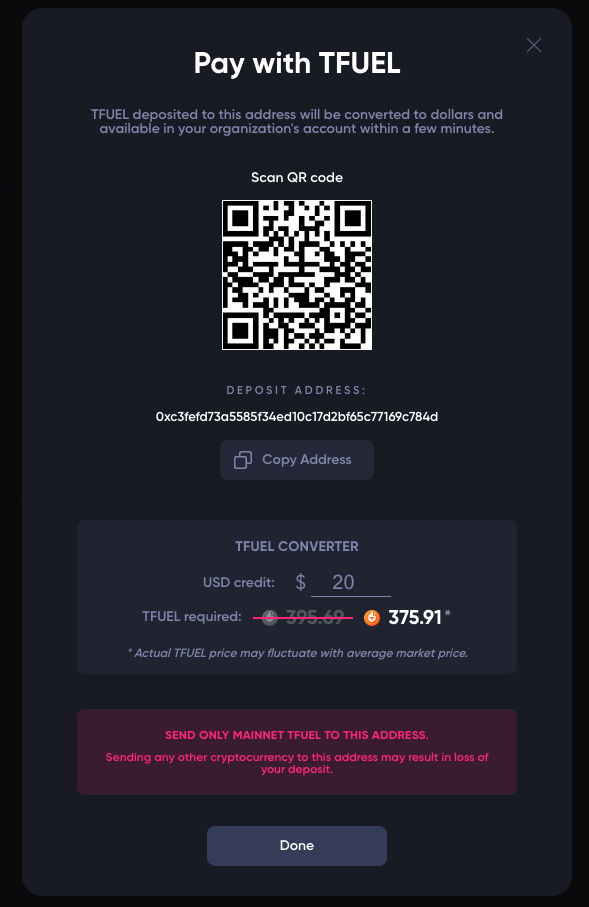
Theta EdgeCloud has introduced a significant enhancement by enabling Theta Fuel (TFUEL) billing for its services. This change positions TFUEL as the primary payment method for EdgeCloud, mirroring its role for the thousands of global Edge Nodes that support the network. Users opting to pay with TFUEL tokens will benefit from a 5% discount on their service fees, which encompass AI inference and training, video livestreaming, and future video/game rendering functionalities. This strategic move not only incentivizes the use of TFUEL but also strengthens its integration into the broader Theta ecosystem.
The adoption of EdgeCloud has seen remarkable growth, particularly within academic institutions in the United States and South Korea. Notable universities such as the University of Oregon, Korea University, and Yonsei University are leveraging EdgeCloud's hybrid cloud GPU infrastructure to propel AI research forward. This trend highlights Theta's dedication to fostering academic innovation by providing vital computational resources for complex AI projects. Additionally, corporate clients like Jamcoding, a leader in e-learning coding platforms, are utilizing EdgeCloud to address critical AI applications, including computer vision and large language model training, further embedding EdgeCloud into the Theta token economy.
While the support for USD remains essential for attracting Web2 customers, the Theta ecosystem is designed to function as a decentralized economy, where fiat transactions are converted into TFUEL purchases. This ensures that all EdgeCloud activities contribute to the on-chain economy of Theta, even when initiated by non-crypto users. With the recent launch of EdgeCloud Mobile, the potential for integration with the 3.9 billion Android devices worldwide opens new avenues for AI applications. As the AI market is projected to grow significantly, the core payment structure of EdgeCloud will ensure that TFUEL and the Theta token economy remain central to its operations.

a year ago
Manta Network Partners with Aethir for Enhanced GPU Access
Manta Network has recently announced a strategic partnership with Aethir, a prominent decentralized cloud infrastructure provider. This collaboration aims to deliver high-performance GPU access to applications within the Manta Network ecosystem, significantly enhancing scalability and cost-efficiency. The partnership is particularly beneficial for resource-intensive applications in sectors such as artificial intelligence (AI) and gaming, where performance and cost are critical factors. By leveraging Aethir's capabilities, Manta Network seeks to optimize the performance of applications while reducing operational costs, making it an attractive option for developers.
For developers building on the Manta Network, this partnership opens up new avenues for innovation. They can now utilize Aethir's DePIN stack, which provides scalable and affordable high-performance computational power. This is especially advantageous for applications that require intensive processing, allowing developers to access robust computing resources without incurring the high expenses typically associated with centralized cloud services. The ability to expedite research and development will enable faster market entry and innovation, ultimately enhancing the overall performance of applications within the Manta Network ecosystem.
Aethir stands out as a pioneer in decentralized GPU-as-a-service platforms, specifically designed for AI and gaming applications. With a globally distributed network of over 43,000 GPUs, including more than 3,000 NVIDIA H100s, Aethir offers competitive pricing and exceptional computational resources. This decentralized approach minimizes latency and maximizes resource utilization, providing developers with an efficient and cost-effective solution for scaling their projects. Manta Network, recognized as the largest modular Layer 2 scaling solution on Ethereum, continues to attract significant investments and support, further solidifying its position in the web3 landscape.
Signup for latest DePIN news and updates