Latest DePIN AI News
View AI Projects
a year ago
Recraft V3: The New Leader in AI Image Generation
In the rapidly evolving landscape of AI image generation, a new contender has emerged, dethroning established models like Flux and MidJourney. The model, previously known as Red Panda, has been officially unveiled as Recraft V3, developed by a London-based startup. This innovative model has achieved the highest score on the ELO rating system for image generators, surpassing its competitors with impressive efficiency and image quality. Recraft V3 matches the generation speed of SDXL, producing high-quality images in under 10 seconds, and has been praised for its anatomical accuracy and ability to generate images with extended text passages, a feature not offered by other models.
Founded in 2022, Recraft AI initially focused on creating AI-powered tools for graphic designers. However, the company’s trajectory shifted dramatically after securing $11 million in funding from notable investors, including Khosla Ventures and former GitHub CEO Nat Friedman. CEO Anna Veronika Dorogush emphasized that the company’s growth has primarily come from user recommendations rather than extensive marketing. Recraft V3 operates on a subscription model, offering free users a limited number of daily credits while retaining ownership of creations for paid subscribers. This model allows users to generate images with fine details and imperfections, making it a powerful tool for digital design.
Despite its strengths, Recraft V3 is not without limitations. While it excels in realism and detail, it sometimes struggles with spatial awareness in complex scenes, leading to minor misalignments that may require user adjustments. Nonetheless, its pricing strategy and capabilities make it a compelling option for those seeking high-quality, realistic images without the typical “AI look.” As the AI image generation market continues to grow, Recraft V3 stands out as a versatile and powerful alternative, appealing to both casual users and professional designers alike.
a year ago
io.net and GAIB Partner to Democratize GPU Computing Access
io.net, a leading decentralized physical infrastructure network (dePIN) for GPU clusters, has announced a strategic partnership with GAIB, an economic layer focused on AI and compute. This collaboration aims to democratize access to GPU computing resources, enhancing innovation and accessibility. With GAIB already serving as a key GPU supplier to io.net, the partnership will expand to include initiatives in strategic marketing, community engagement, technical integration, and business development.
Tausif Ahmed, VP of Business Development at io.net, emphasized the natural evolution of their relationship, stating that the combination of io.net's decentralized GPU infrastructure and GAIB's innovative approach to GPU tokenization will unlock new possibilities for both communities. The partnership will explore various synergies, including compute tokenization, joint marketing efforts, and coordinated business development initiatives to identify new market opportunities.
Kony Kwong, CEO of GAIB, expressed excitement about the collaboration, highlighting their shared mission to make AI compute accessible to everyone. Both companies plan to leverage their expertise to execute initiatives that may include technology evaluations, deployment planning, and publicity campaigns. This partnership represents a significant advancement in making high-performance GPU computing more accessible and efficient, creating new opportunities for GPU owners to generate yield from their assets.
a year ago
Bittensor's TAO Token Surges Amidst Bullish Crypto Market
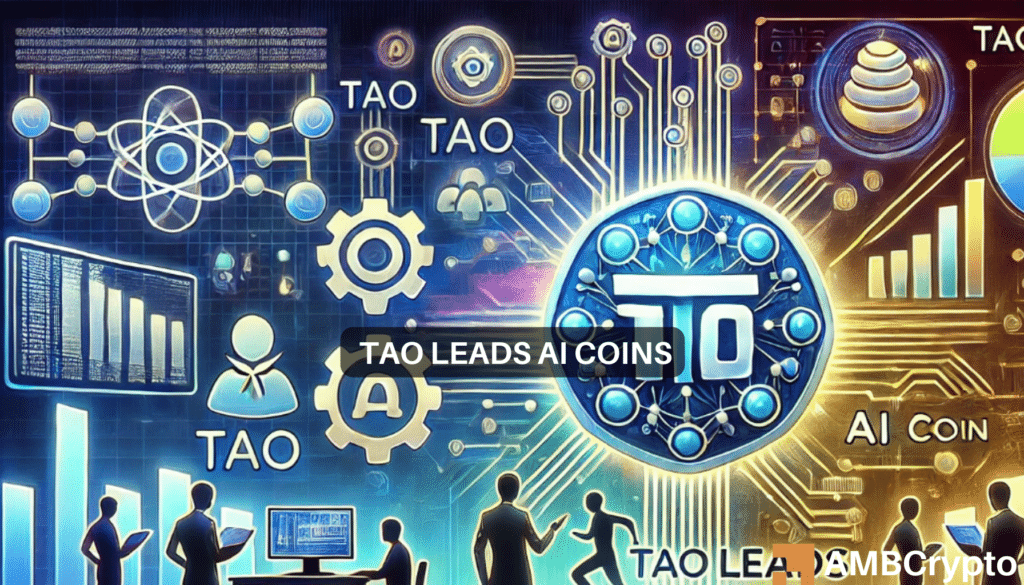
In the latest developments within the cryptocurrency market, Bittensor's token, TAO, has seen a remarkable surge of 7.1% over the past 24 hours, with its trading volume skyrocketing by 104%. This surge coincides with a broader upswing in the crypto market, where Bitcoin has reached an impressive price of $71,500. As a result, many altcoins are benefiting from this bullish trend, but TAO has emerged as a standout performer, trading at $544 at the time of reporting. Other AI-themed coins, such as Injective (INJ) and Near Protocol (NEAR), have also experienced gains, but none have matched TAO's performance.
The upward momentum for TAO is further supported by market analysis indicating a growing bullish sentiment among investors. The Long/Short Ratio for Bittensor suggests that long position holders are currently dominating the market, with 50.96% of positions being long. This indicates that most investors are optimistic about the future price movements of TAO. Additionally, the positive funding rate observed over the past week reinforces this bullish outlook, as it shows that long position holders are willing to incur premium fees to maintain their positions during market downturns.
As TAO continues to gain traction, technical indicators such as the Relative Strength Index (RSI) have shown an increase from 45 to 50, suggesting rising buying pressure. If the current positive sentiment persists, TAO is well-positioned to reclaim the $584 resistance level. However, if this price increase is driven by speculation alone, there is a risk of a potential decline to $463. Overall, the current market dynamics indicate a favorable outlook for TAO, with the potential for further gains in the near future.

a year ago
Theta Labs Partners with University of Oregon for AI Research Expansion
Theta Labs has announced a significant multi-year partnership with the University of Oregon’s Distopia Laboratory, led by Assistant Professor Suyash Gupta. This collaboration will leverage Theta EdgeCloud for large-scale AI model training and inference, marking a notable expansion of Theta Labs' presence in the U.S. academic sector. The University of Oregon, recognized as a Tier 1 research institution, hosts several advanced research centers focused on AI and computer science, which are crucial for the advancement of these fields in the United States. Dr. Gupta's research integrates distributed systems, blockchain, and federated learning, emphasizing the development of scalable and fault-tolerant architectures. His contributions to prestigious conferences underscore his expertise, particularly with his award-winning paper at EuroSys 2023 and significant work presented at leading data engineering conferences.
The partnership with Theta Labs opens new avenues for the Distopia Laboratory to enhance its AI research capabilities, particularly in distributed systems and federated learning. Theta EdgeCloud's decentralized framework allows researchers to run complex AI models more efficiently by distributing tasks across its network, resulting in faster and more cost-effective computing solutions compared to traditional cloud services. This innovative approach not only makes powerful computing resources more accessible but also maximizes the utilization of otherwise idle resources, enabling the lab to tackle more sophisticated AI challenges and accelerate research initiatives in decentralized systems.
The collaboration exemplifies the growing importance of decentralized cloud infrastructure in academic research, providing high-performance computing at lower costs than conventional providers. This enables academic institutions to undertake ambitious projects with limited budgets, allowing them to compete more effectively with well-funded commercial AI labs. The ability to conduct larger-scale experiments, train complex models, and explore advanced AI applications is crucial for academic labs, which often face time constraints in submitting research and publishing findings. The partnership between Theta Labs and the University of Oregon is a testament to the transformative potential of decentralized computing in advancing AI research in academia.

a year ago
Aethir Partners with GMI Cloud and GAIB to Enhance AI Development with H200 GPUs
Aethir, a decentralized GPU-as-a-service provider, has announced a strategic partnership with GMI Cloud and GAIB to enhance its AI computing capabilities. This collaboration will introduce H200 Tensor Core GPUs into Aethir's decentralized computing ecosystem, aimed at supporting AI developers globally. The integration of these advanced GPUs is designed to optimize professional-grade AI computations, making it easier for developers to build, train, and deploy sophisticated models. Daniel Wang, CEO of Aethir, emphasized that this initiative will empower the next generation of AI developers with essential tools for efficient development.
In recent months, Aethir has been actively pursuing partnerships and initiatives to bolster its hardware capabilities. Notably, in September, the company collaborated with Filecoin to provide decentralized infrastructure solutions for international AI developers. Furthermore, in October, Aethir launched a $100 million Ecosystem Fund aimed at supporting AI-focused cloud gaming developers, offering grants and incentives to utilize its GPU resources. This reflects Aethir's commitment to channeling its hardware capabilities into the burgeoning field of AI development.
The partnership with GMI Cloud and GAIB marks a significant step in Aethir's mission to revolutionize AI development. By making H200 Tensor Core GPUs available, the collaboration seeks to facilitate innovative AI solutions on a global scale. GMI Cloud's CEO, Alex Yeh, highlighted that this initiative is not merely about building a cloud service but creating the foundational infrastructure for the AI era. The optimism surrounding this partnership underscores the potential impact of these advanced GPUs in driving AI innovation and enhancing the capabilities of developers and data scientists worldwide.
a year ago
Verida AI Launches Private Data Bridge for Secure AI Integration
Verida AI is at the forefront of integrating user data into artificial intelligence projects while prioritizing privacy and data ownership. Their innovative solution, the Verida Private Data Bridge, allows both individuals and organizations to securely connect and utilize sensitive user data within AI applications. This technology is designed to empower developers by providing a streamlined, one-click integration process that ensures compliance with privacy regulations and eliminates the need for third-party oversight. As AI continues to evolve, Verida AI is committed to creating a decentralized future where data privacy is a fundamental standard rather than an afterthought.
The company recently announced that whitelist access for Verida AI is now open to all builders attending Devcon 2024. This initiative presents a unique opportunity for developers to be among the first to explore the capabilities of the Verida Private Data Bridge. By joining the whitelist, developers can gain early access to powerful tools that facilitate the integration of personal data into AI applications, ranging from healthcare to finance. The Private Data Bridge not only enhances data sharing capabilities but also ensures that users maintain control over their data, further promoting a privacy-first architecture.
Looking ahead, Verida AI plans to introduce several exciting features and programs, including Data Connector Grants aimed at supporting developers who wish to integrate Verida’s data connectors into their applications. This initiative is part of Verida's broader mission to enhance the functionality and scalability of decentralized applications while maintaining a strong focus on privacy. As Verida AI continues to innovate, it invites developers to join in building a future where data privacy and AI innovation go hand in hand, paving the way for transformative advancements in technology.
a year ago
Aethir Partners with GAIB and GMI Cloud to Enhance AI Development with H200 GPUs
In a significant development for the AI landscape, Aethir has partnered with GAIB and GMI Cloud to integrate H200 Tensor Core GPUs into their decentralized computing platforms. This collaboration aims to democratize access to high-performance GPU resources, making it easier and more cost-effective for developers and businesses worldwide to engage in AI and machine learning. Daniel Wang, CEO of Aethir, emphasized that this integration empowers the next generation of AI developers by providing them with the necessary tools to build, train, and deploy advanced models, regardless of their geographical or financial limitations.
GAIB is introducing an innovative financial model that allows users to invest in GPU-backed assets, thereby generating rewards and yields. Kony, CEO of GAIB, highlighted that this model addresses the challenges associated with investing in illiquid compute assets and lowers the barriers to entry for potential investors. By transforming GPUs into liquid, tradeable yield-bearing assets, GAIB aims to unlock new investment opportunities and enhance market efficiency, ultimately contributing to the growth of the AI economy.
GMI Cloud's role in this partnership focuses on optimizing the integration of the H200 GPUs, ensuring they deliver peak performance. Alex Yeh, founder and CEO of GMI Cloud, stated that their mission is to support humanity's AI ambitions by providing an efficient, on-demand GPU cloud. This collaboration not only enhances computational capabilities for enterprises and developers but also drives innovation in AI applications. The H200 GPUs, built on the Hopper architecture, promise significant improvements in memory, bandwidth, and efficiency, further solidifying the foundation for the AI era. Additionally, Aethir's recent launch of the Aethir Catalyst program, which allocates $100 million to AI and gaming startups, underscores their commitment to fostering innovation in this space.
a year ago
Stratos Partners with FurGPT to Enhance Virtual Pet Art through AI and Web 3.0
Stratos has announced an exciting partnership with FurGPT, a pioneering platform that integrates AI technology with Web 3.0 to create personalized virtual pet art. This collaboration leverages Stratos' decentralized storage infrastructure, which provides secure and scalable storage solutions for the virtual pet creations and interactions of FurGPT users. Operating across multiple networks, including BNB Chain, Ethereum, and Lithosphere, FurGPT combines the creativity of AI with decentralized finance (DeFi) to enhance digital experiences in a unique way.
With this partnership, FurGPT users can expect improved performance and data security while bringing their customized digital pets to life. Stratos' decentralized storage network is designed to ensure high performance, reliability, and resilience against the limitations often found in centralized systems. This solid foundation allows FurGPT to expand its functionalities in both AI and Web 3.0, ultimately enriching the user experience and fostering creativity in the digital art space.
The collaboration between FurGPT and Stratos signifies a significant step towards empowering users to create, connect, and explore the future of interactive and decentralized digital art. By merging innovative technologies in a secure Web3 environment, this partnership is set to redefine how users engage with digital pets and art, making it a noteworthy development in the blockchain and AI landscape.
a year ago
Crust Network Partners with Phoenix AI to Enhance Decentralized Storage for AI Applications
The rapid evolution of artificial intelligence (AI) technologies, particularly in the realm of large language models (LLMs) and AI-generated content, necessitates a corresponding advancement in decentralized storage and computing infrastructures. Recognizing this critical need, Crust Network has announced its partnership with the Phoenix AI Ecosystem as the first decentralized physical infrastructure network (DePIN) storage-focused partner. This collaboration aims to enhance the capabilities of decentralized storage, which is essential for supporting the data requirements of AI applications, thereby fostering a more robust DePIN infrastructure.
Crust Network operates as a layer 1 blockchain built on substrate, incentivizing the creation and utilization of storage orders and nodes on the InterPlanetary File System (IPFS). With over 1,000 global nodes and a total storage capacity exceeding 700 petabytes, Crust has established itself as a leading decentralized cloud storage solution. The partnership with Phoenix AI will provide Crust with access to idle compute resources through Phoenix’s SkyNet AI Node Network and SkyNet Elastic Compute. This integration not only expands Crust's ecosystem beyond storage nodes but also enhances its ability to support AI-driven workloads, thereby accelerating the growth of DePIN infrastructure.
In addition to accessing compute resources, Crust Network will offer enhanced AI storage solutions by integrating with SkyNet. This partnership provides an alternative decentralized storage option alongside Filecoin for Phoenix AI’s models and datasets, granting AI developers greater flexibility and resilience in managing critical data. Phoenix AI itself is a decentralized elastic compute infrastructure designed for the seamless training and deployment of next-generation AI applications. Through this strategic alliance, Crust Network and Phoenix AI are poised to redefine the landscape of AI infrastructure, ensuring that storage and computing capabilities evolve in tandem with technological advancements.

a year ago
China Mobile's Migu Partners with Phoenix for AI-Generated Content in Metaverse
China Mobile's digital content subsidiary, Migu, has announced a strategic partnership with Phoenix, a decentralized AI infrastructure platform, to enhance its applications in the metaverse and gaming through scalable AI-generated content (AIGC) infrastructure. As the largest wireless carrier in China, serving over 1 billion users, Migu caters to more than 900 million users across its diverse offerings, including video streaming, gaming, and music apps. This collaboration aims to leverage AIGC capabilities to create innovative and immersive digital experiences, which have become a focal point for Migu in recent years.
The integration of AI-powered content into the metaverse and gaming sectors presents significant challenges, requiring a robust combination of AIGC models for images, 3D content, and videos, alongside a scalable AI compute infrastructure. Phoenix's DePIN-based elastic AI compute layer, known as SkyNet, along with its ready-to-use AIGC modules within Phoenix GenAI, provides a comprehensive solution for real-time AIGC capabilities. These include functionalities such as text-to-image generation, AI-to-3D conversions, and interactive non-player characters (NPCs) powered by large language model (LLM) chatbot technology.
Moreover, the open API platform as a service (PaaS) layer of Phoenix GenAI allows Migu's extensive app ecosystem to access and customize AI-generated content on a large scale, catering to its vast user base. One notable application of this partnership could be the creation of AI-generated NFTs within Migu's metaverse applications, showcasing the potential of AIGC in enhancing user engagement and experience. This collaboration marks a significant step forward in the integration of AI technologies within the digital content landscape, promising to reshape the future of interactive entertainment.
Signup for latest DePIN news and updates