Latest DePIN AI News
View AI Projects
a year ago
ARC and Stratos Partner to Enhance Decentralized AI Infrastructure
In a groundbreaking development, ARC has announced a strategic partnership with Stratos, aiming to revolutionize the integration of artificial intelligence (AI) within decentralized infrastructures. ARC, known for its advanced AI platform, focuses on enhancing efficiency and precision across various applications, including AI-driven solutions and Web3 security. The collaboration promises to leverage Stratos' decentralized storage network, which is designed to provide a robust and privacy-centric foundation for ARC's AI capabilities. This synergy is expected to elevate the standards of decentralized applications by combining cutting-edge technology with a secure infrastructure.
The partnership highlights the adaptability of ARC's AI, which can evolve according to user requirements, offering features such as Continual Prompting and comprehensive Code Reviewing. By utilizing Stratos' decentralized framework, ARC aims to ensure that its AI solutions not only meet but exceed the performance of traditional centralized systems. This alignment of advanced AI with decentralized technology is set to create a more efficient and secure environment for developers and users alike, fostering innovation in the Web3 space.
As the landscape of technology continues to evolve, this partnership between ARC and Stratos signifies a pivotal moment for decentralized AI and Web3 applications. By providing builders with a high-performance, trustless infrastructure, the collaboration is poised to set a new benchmark in the industry. Together, ARC and Stratos are committed to driving the next generation of decentralized applications, ensuring that they are equipped with the necessary tools to thrive in a rapidly changing digital ecosystem.

a year ago
Emerging Crypto Trends for 2024: A Look Ahead
The crypto market is experiencing a surge of optimism as we move into 2024, with Bitcoin reaching new all-time highs and Ethereum receiving regulatory approvals for spot ETH ETFs. This positive sentiment has sparked discussions about the future of the crypto landscape, highlighting key narratives that are expected to shape the industry in the coming years. Among these trends, decentralized social platforms, restaking, data availability layers, decentralized physical infrastructure networks (DePIN), tokenization of real-world assets (RWA), artificial intelligence (AI), and political memecoins are emerging as significant drivers of both buzz and utility.
Decentralized social platforms are gaining traction as they offer users censorship-free environments and control over their data. Platforms like Warpcast and Friend.tech are leading this movement, allowing users to migrate their content and followers seamlessly. Meanwhile, restaking, a concept pioneered by EigenLayer, allows validators to lock up liquid staking tokens as collateral, enhancing the security of the Ethereum network while enabling token holders to earn additional yields. This trend has led to the emergence of several competitors in the restaking space, further diversifying the market.
The tokenization of real-world assets is another trend that is gaining momentum, with major players like BlackRock entering the space. By representing assets such as real estate and fine art as digital tokens, tokenization facilitates fractional ownership and enhances liquidity. Additionally, the AI narrative continues to grow, with projects like Fetch.ai and Bittensor focusing on creating decentralized AI solutions. Lastly, political memecoins have captured the attention of investors as they satirize political figures, reflecting the speculative nature of the crypto market. As 2024 unfolds, these narratives will likely continue to evolve and influence the crypto ecosystem significantly.

a year ago
Decentralized Technologies Transforming Industries
In the rapidly evolving digital landscape, decentralized technologies are transforming traditional industries by providing safer and more efficient alternatives. Leading platforms such as Filecoin, Bittensor, Theta Network, and Arweave are at the forefront of this revolution, each addressing unique challenges in cloud storage, AI development, video streaming, and data retention. By leveraging blockchain technology, these projects enhance security, fairness, and long-term reliability, paving the way for a future where control is distributed and innovation flourishes without boundaries.
Filecoin is revolutionizing cloud storage by decentralizing data distribution across a network of nodes, significantly reducing risks associated with centralized providers like Amazon and Google. With a market cap of $2.34 billion, Filecoin allows users to pay for storage using its native token while rewarding miners for enhancing network security. This innovative approach minimizes the single point of failure typical in traditional cloud services, ensuring that data remains safe and accessible.
Bittensor, with a market cap of $4.39 billion, is reshaping AI development through a decentralized machine learning network. By incentivizing contributors with its native TAO token, Bittensor democratizes AI training and fosters open-source collaboration. Similarly, Theta Network, valued at $1.35 billion, enhances video streaming quality in underserved areas by allowing users to share bandwidth. With its dual-token system, THETA for governance and TFUEL for transactions, Theta Network is a game-changer in the video streaming sector. Lastly, Arweave, with a market cap of $2.78 billion, offers permanent storage solutions, ensuring data availability forever through its unique AR token incentive model. Together, these platforms exemplify the potential of decentralized technologies to redefine industry standards and practices.

a year ago
Streamr: Revolutionizing Real-Time Data Streaming in a Decentralized World
Streamr is an innovative decentralized network designed for streaming live media and real-time data securely and at scale. It offers a range of use cases, including AI data delivery, live video streaming, and communication without the need for centralized servers. The platform allows users to stream verifiable data from IoT devices and networked hardware, making it a versatile solution for various industries. Additionally, Streamr facilitates data monetization by enabling users to buy and sell subscriptions to data streams, thus creating a marketplace for real-time data exchange.
The Streamr Network operates on a robust and permissionless peer-to-peer architecture, which enhances its scalability and resilience against malicious attacks. By leveraging companion blockchains such as Ethereum, Gnosis, and Polygon, Streamr ensures secure identity management and payment processing. This decentralized approach addresses the limitations of traditional centralized services, which often suffer from single points of failure and vendor lock-in. With a focus on low latency and secure messaging, Streamr is poised to become a critical infrastructure layer for the emerging decentralized web (Web3).
Founded in 2017 by a team of visionaries, Streamr has grown into a collaborative open-source project with around 30 contributors worldwide. Governance within the project is facilitated through voting mechanisms using the $DATA token, which serves as the backbone of the network. The recent release of the complete $DATA tokenomics marks a significant milestone in the Streamr roadmap, further solidifying its position in the decentralized data ecosystem. Node operators play a crucial role in securing and relaying data streams, while delegators can earn revenue shares by supporting these operators, fostering a community-driven approach to data management.
a year ago
C4E and Grenton Showcase Blockchain and AI Solutions at Gitex Global Conference
Last week, the Gitex Global Conference took place from October 14th to 18th in Dubai, UAE, where our team had the opportunity to collaborate with our partner Grenton. This annual event serves as a significant platform for fintech decision-makers to connect, share ideas, and network. Located at the Dubai World Trade Centre, Gitex Global attracted tens of thousands of participants, including entrepreneurs, investors, and industry insiders. Our focus during the conference was to showcase the integration of blockchain technology with AI and Smart Home solutions, emphasizing their potential benefits for sustainability and the development of smart cities.
During the event, we engaged with key decision-makers and investors, presenting how our joint solutions can enhance community engagement and facility management through innovative technologies. Notably, Bartlomiej Gierszyn, CEO of Grenton, delivered a presentation during the Tech Talks segment of Gitex 2024. He highlighted the aggregation of data from smart homes for notifications and alerts, the role of AI in facility management, and the application of blockchain for fostering community engagement. This presentation not only provided valuable insights but also sparked significant interest among potential investors and attendees.
Overall, our experience at Gitex Global was highly productive, allowing us to expand our network and generate interest in our collaborative solutions with Grenton. We believe that the conference could have been even more beneficial with a longer duration, as the discussions and networking opportunities were incredibly valuable. To stay updated on our developments and future initiatives, we encourage following our social media channels.

a year ago
The Rise of Crypto + AI: A New Frontier in Web3 Investment
In recent weeks, the convergence of cryptocurrency and artificial intelligence (AI) has captured the attention of Web3 venture capital firms, signaling a significant shift in investment focus. Coinbase Ventures, a prominent player in the crypto space, has published an official thesis outlining its commitment to Crypto + AI projects. Hoolie Tejwani, head of Coinbase Ventures, believes that blockchain and generative AI will intertwine to form the foundation of our digital lives. This shift is not isolated; other venture capital firms, such as CoinFund and a16z, are also investing heavily in this emerging sector, with a reported $213 million directed towards AI projects in the third quarter of 2024.
Coinbase Ventures categorizes the Crypto + AI landscape into three primary buckets. The first bucket focuses on AI agents that utilize cryptocurrency for transactions, suggesting a future where AI handles various tasks and requires a seamless payment method. Projects like Skyfire and Payman are already exploring this concept, with Payman enabling AI agents to transact with humans. The second bucket encompasses decentralized AI systems, emphasizing the importance of data in training AI. Initiatives like Vana are pioneering ways for users to monetize their data while maintaining privacy, potentially revolutionizing how AI is trained and governed.
The third bucket delves into on-chain AI, where AI generates software code and smart contracts in real-time. This innovative approach could redefine how applications are built and operated on blockchain networks. However, the rapid proliferation of Crypto + AI projects raises questions about their substance and viability. While some view this integration as a necessary evolution, others caution against the hype surrounding it. Ultimately, the future of Crypto + AI will depend on its ability to provide tangible benefits and empower users, rather than merely riding the wave of technological trends.

a year ago
CUDOS Achieves Major Milestones in September with ASI Merger and Infrastructure Expansion
September marked a transformative month for CUDOS, characterized by significant developments, impressive growth metrics, and strategic partnerships. A highlight was the proposal for CUDOS to join the Artificial Superintelligence Alliance (ASI), aiming to synergize AI and cloud computing for sustainable innovation. The community's enthusiastic response culminated in a successful vote for the merger, paving the way for a new chapter in CUDOS's evolution. Detailed resources, including a voting guide and migration steps for the upcoming token merger with $FET, have been made available to assist users in this transition.
The month also witnessed remarkable operational achievements, with a staggering 8,475 new virtual machines (VMs) deployed, reflecting a 159% increase from the previous month. This surge brought the total number of VMs across the CUDOS Intercloud to nearly 30,000. Additionally, the user base surpassed 11,000, and the platform logged over 500,000 compute hours, showcasing the diverse workloads being supported. Financially, CUDOS generated over $700,000 in revenue, underscoring its robust performance and growing adoption in the market.
Infrastructure expansion was another key focus, with the establishment of new data centers in Norway and the USA, enhancing global computing capabilities. These facilities are equipped with advanced hardware to ensure efficient service delivery. Furthermore, CUDOS engaged with the community through events and discussions, including an AMA with CEO Matt Hawkins, who emphasized the merger's potential benefits. The media also recognized these milestones, with coverage in platforms like Cointelegraph, highlighting CUDOS's commitment to advancing AI and decentralized computing. Looking ahead, CUDOS is poised for continued growth and innovation, thanks to the unwavering support of its community.
a year ago
Auki's Posemesh: A Decentralized Network for Machine Perception
Auki is pioneering the development of the posemesh, a decentralized machine perception network designed to bridge the gap between humans, devices, and AI for the next 100 billion users on Earth and beyond. This innovative network aims to create an external sense of space that machines and AI can utilize to collaboratively comprehend the physical world. With 70% of the global economy still reliant on physical locations and labor, Auki's mission is to enhance civilization's intercognitive capacity, enabling better problem-solving and experiences in conjunction with AI.
The posemesh introduces several features aimed at improving various sectors. For retailers, it addresses the critical challenge of product placement and shelf space allocation, providing insights that enhance operational efficiency. In property management, the posemesh facilitates clear communication and asset tracking, ensuring that issues are promptly identified and resolved. Furthermore, for events, it offers precise positioning and shareable navigation links, transforming how visitors navigate spaces and maximizing their experiences through augmented reality (AR) maps.
Auki emphasizes the importance of privacy in its decentralized approach, ensuring that no single organization can capture or monitor private spaces. By allowing users to contribute to AI’s understanding of the world while retaining ownership of their data, the posemesh represents a significant step towards making the world machine-readable. This initiative not only supports the AI revolution but also addresses the inherent challenges and dangers associated with data privacy in spatial computing.
a year ago
Bittensor (TAO) Shows Bullish Potential Amid Market Consolidation
Bittensor (TAO) has recently captured the attention of traders and investors, particularly as it has experienced a notable 20% increase this month. Despite a 10% decline over the past week, the token's performance indicates a bullish outlook for the longer term. TAO has successfully broken out of an inverted head and shoulders pattern, surpassing the $600 level before entering a consolidation phase. Traders are now closely monitoring the $500 zone, as a bounce from this level could signal further upward movement if market conditions align favorably.
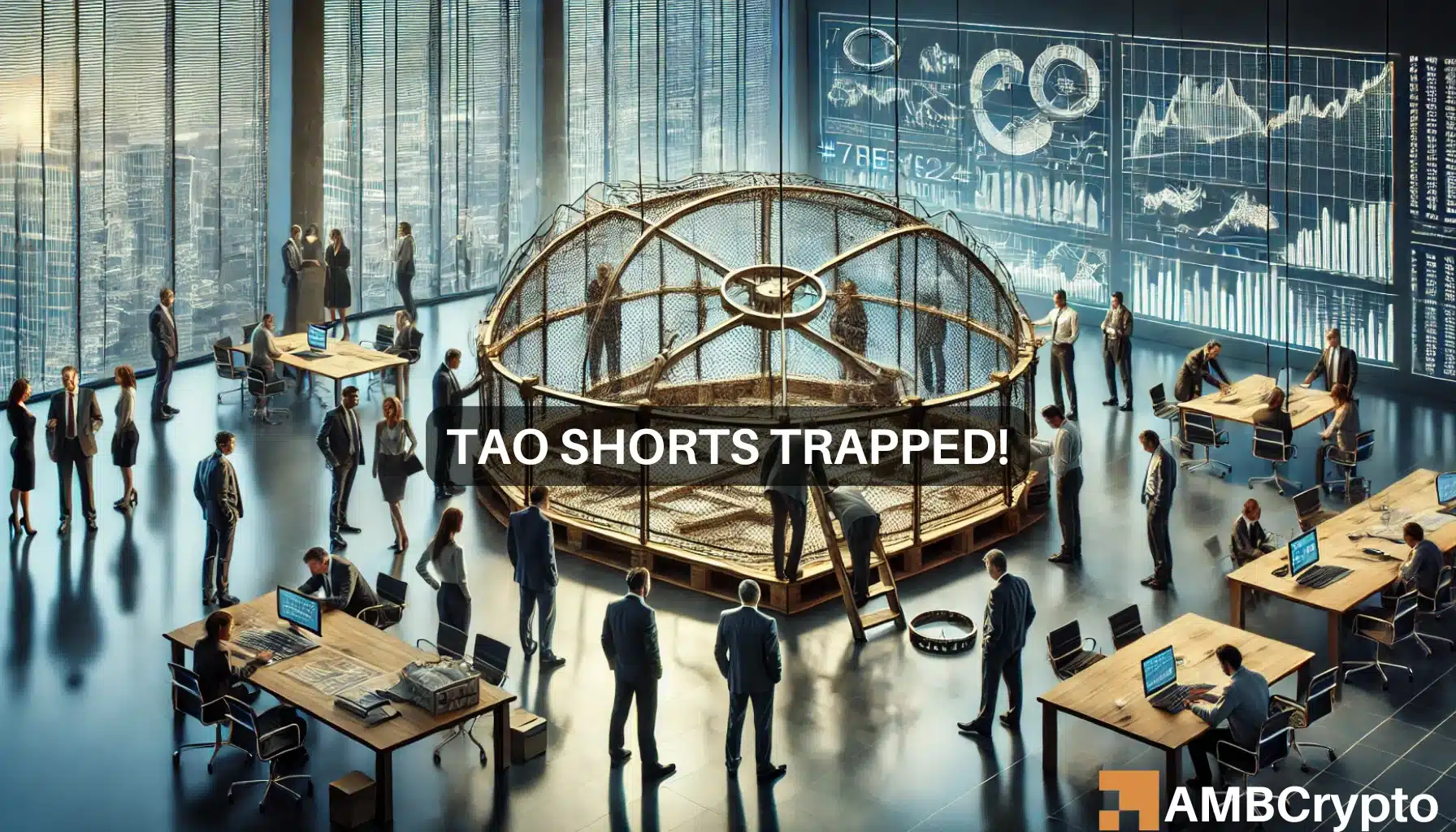
As traders navigate the current market dynamics, many have mistakenly interpreted the recent price action as a sign of a bearish trend. This has led to an influx of short positions, which may have backfired as TAO's price surged, trapping these shorts. Currently trading around $560, TAO's return to breakeven levels may prompt trapped traders to exit their positions, potentially triggering a bounce. The token's recent pullback to the $500 range is viewed as a short-term buying opportunity, with analysts suggesting a bullish convergence on the 4-hour chart could lead to a price target of $800 by 2025.
Despite the optimistic long-term outlook for Bittensor, traders remain cautious due to some weakness indicated by the MACD. If TAO loses support, it could dip below the $500 mark again. Nevertheless, Bittensor continues to rank among the top AI and Big Data projects, alongside notable competitors like Near Protocol, Oasis, and The Graph. This strong positioning in the market suggests that Bittensor is well-equipped to recover from recent corrections and may see further gains in the coming months, making it a project to watch closely for potential investment opportunities.
a year ago
CUDIS Launches Mini App to Enhance Health Data Management and Privacy
CUDIS, a pioneering company in the realm of wearable technology, has recently launched the CUDIS Mini App integrated with World App, a platform co-founded by Alex Blania and Sam Altman. This new app aims to enhance the interaction with health data while addressing privacy concerns associated with AI. The integration utilizes World ID, a secure protocol that allows individuals to prove their uniqueness online without compromising their privacy. Edison Chen, CEO of CUDIS, emphasized that this collaboration showcases the potential of blockchain technology in transforming personal health data management, making it more secure and user-friendly.
In conjunction with the Mini App, CUDIS is introducing a limited edition wellness ring designed specifically for World ID holders. This sleek ring features a portable battery cartridge and improved fitness tracking capabilities. Users of the World App can engage with the CUDIS Mini App without needing to purchase the ring, as they can earn CUDIS points through various activities such as signing up, participating in sports challenges, and interacting with a personalized AI coach. This initiative not only promotes healthy habits but also incentivizes users with cryptocurrency rewards for their engagement.
The CUDIS Mini App leverages World’s proof of human verification technology to ensure the legitimacy of shared biometric data. This facilitates secure access to health resources and promotes genuine human interactions. The launch of this app was announced during World’s “a new world” event, which reached an audience of 15 million users. CUDIS aims to empower individuals by allowing them to own and potentially monetize their health data, fostering a healthier generation of smart ring users.
Signup for latest DePIN news and updates