Latest DePIN AI News
View AI Projects
7 months ago
LBank Lists Phoenix (PXT): Bridging AI and Decentralized Infrastructure
On April 24, 2025, LBank Exchange announced the listing of Phoenix (PXT), a new digital asset designed to bridge the gap between Artificial Intelligence (AI) and decentralized physical infrastructure networks (DePIN). The PXT/USDT trading pair is now available, marking a significant step in the evolution of Web3. Phoenix aims to provide a modular and scalable framework for developing AI agents and intelligent applications directly on the blockchain, enhancing user interaction with digital assets and decentralized governance.
Phoenix's ecosystem is built on the principles of composability and accessibility, allowing developers and users to create autonomous agents and decentralized applications with minimal technical barriers. The integration of AI with DePIN transforms decentralized networks into programmable economies, enabling AI agents to engage in value creation and resource coordination autonomously. This innovative approach addresses critical limitations in the current Web3 landscape, such as cross-chain interoperability and the complexity of onboarding non-technical users, while enhancing the real-world utility of decentralized systems.
The native utility token, PXT, plays a vital role in the Phoenix ecosystem, facilitating economic interactions and incentivizing participation among developers, agents, and users. With a total supply of 21 billion PXT tokens, the distribution includes community incentives, ecological development funds, and allocations for team support and strategic partners. This tokenomics model not only fuels transactions and dApp operations but also fosters a sustainable DePIN economy, allowing for staking and cross-chain economic activities. Phoenix is poised to drive the next wave of adoption at the intersection of AI, DeFi, and digital infrastructure.

7 months ago
io.net and Mira Network Forge Partnership to Enhance AI Reliability
In a significant development for the decentralized AI landscape, io.net, a DePIN for GPU compute, has announced a strategic partnership with Mira Network. This collaboration is set to tackle the pressing challenges of AI accuracy and reliability, aiming to create scalable and decentralized solutions for advanced AI applications. By leveraging io.net's decentralized GPU infrastructure, Mira Network intends to enhance its operations while simultaneously reducing costs and latency, thus paving the way for more efficient AI implementations.
A key component of this partnership is the support for Mira Network's Node Delegator Program, which allows contributors to delegate GPU resources. This initiative lowers the technical barriers for individuals and organizations eager to engage in the decentralized AI ecosystem, enabling them to support Mira's consensus operations while earning network rewards. As AI technology continues to evolve, the partnership seeks to ensure that AI can deliver consistent, reliable, and unbiased insights, a sentiment echoed by Tausif Ahmed, Chief Business Development Officer at io.net.
The urgency of addressing AI's accuracy challenges is underscored by the current error rates that can reach up to 30% in tasks requiring advanced reasoning. Mira Network aims to mitigate this issue through innovative developments that evaluate AI-generated outputs across various models. Their new integrations have reportedly reduced first-pass mistakes to below 5%, with aspirations to achieve error rates of less than 0.1% through ongoing research. Stone Gettings, Head of Growth at Mira Network, emphasizes that the partnership with io.net will be crucial in further decentralizing their network and providing users with access to reliable GPU resources, thereby accelerating AI adoption in various sectors.
7 months ago
IoTeX Launches Quicksilver and Expands DePIN Ecosystem in Q1 2025
In the first quarter of 2025, IoTeX made significant strides with the introduction of Quicksilver, a decentralized physical infrastructure network (DePIN) module that enables AI agents to interact with real-world data. This innovative framework aims to enhance the capabilities of AI by allowing it to process real-time data and respond adaptively to its environment. Partnerships with GEODNET and Nubila have been established to integrate their devices with the ioID module, facilitating machine verifiability and verified data uploads onto the IoTeX blockchain. Despite a decline in average daily active wallets and transactions, the network still shows impressive year-over-year growth, with active wallets up 850% and transactions up 2,250% compared to the previous year.
The IoTeX Network operates on a modular infrastructure that combines an EVM-compatible Layer-1 blockchain with off-chain computing capabilities. Users can stake the native token, IOTX, to vote for delegates responsible for securing the network and validating transactions. In Q1, the total fees on the network decreased by 55% quarter-over-quarter to $201,000, primarily due to significant drops in gas and decentralized exchange (DEX) fees. However, the network's staking activity remained robust, with 120 active delegates securing 3.8 billion IOTX, representing 40% of the circulating supply.
IoTeX's commitment to innovation is evident in its ongoing development of the Quicksilver framework, which integrates AI with decentralized networks. The introduction of BinoAI, an autonomous AI agent, further exemplifies this effort, as it shares insights about DePIN projects on social media. Additionally, the partnerships with GEODNET and Nubila highlight IoTeX's focus on verifiability and real-world data applications, paving the way for future collaborations aimed at enhancing the DePIN ecosystem. As IoTeX continues to evolve, its emphasis on integrating AI and decentralized technologies positions it as a leader in the blockchain space, driving demand for DePIN solutions.

7 months ago
CUDOS Intercloud Revolutionizes AI Deployment with One-Click Templates
In a significant advancement for distributed computing, CUDOS Intercloud has introduced one-click templates that simplify the deployment of AI applications. This innovative approach focuses on accessibility and usability, allowing developers to launch applications with minimal effort. By eliminating the traditional complexities associated with AI infrastructure, such as dependencies and vendor lock-ins, CUDOS Intercloud enables instant deployment without the need for KYC or sign-ups. Users can connect their digital wallets and get started in mere seconds, which is particularly beneficial for teams needing to iterate quickly in the fast-paced AI and Web3 landscapes.
The CUDOS Intercloud platform now boasts a diverse catalog of ready-to-launch applications tailored for various users, including AI developers and educators. Key offerings include JupyterLab for solo experimentation, JupyterHub for collaborative environments, and vLLM for serving large language models at scale. Additionally, tools like Ollama provide user-friendly interfaces for newcomers, while OpenManus showcases the potential of agentic AI assistants. These applications collectively form a robust foundation for a distributed AI-ready stack, enhancing accessibility and scalability for underfunded teams and global researchers.
Looking ahead, CUDOS Intercloud is committed to expanding its app catalog with more open-source tools and enterprise-ready solutions. The platform aims to deepen integrations with Web3 APIs and support smart contract-based resource provisioning. As the landscape of distributed applications evolves, the one-click templates will serve as a crucial interface between users and the underlying infrastructure, driving the growth of the AI economy. CUDOS Intercloud invites users to share ideas for future templates and features, fostering a collaborative environment for innovation in distributed computing.
8 months ago
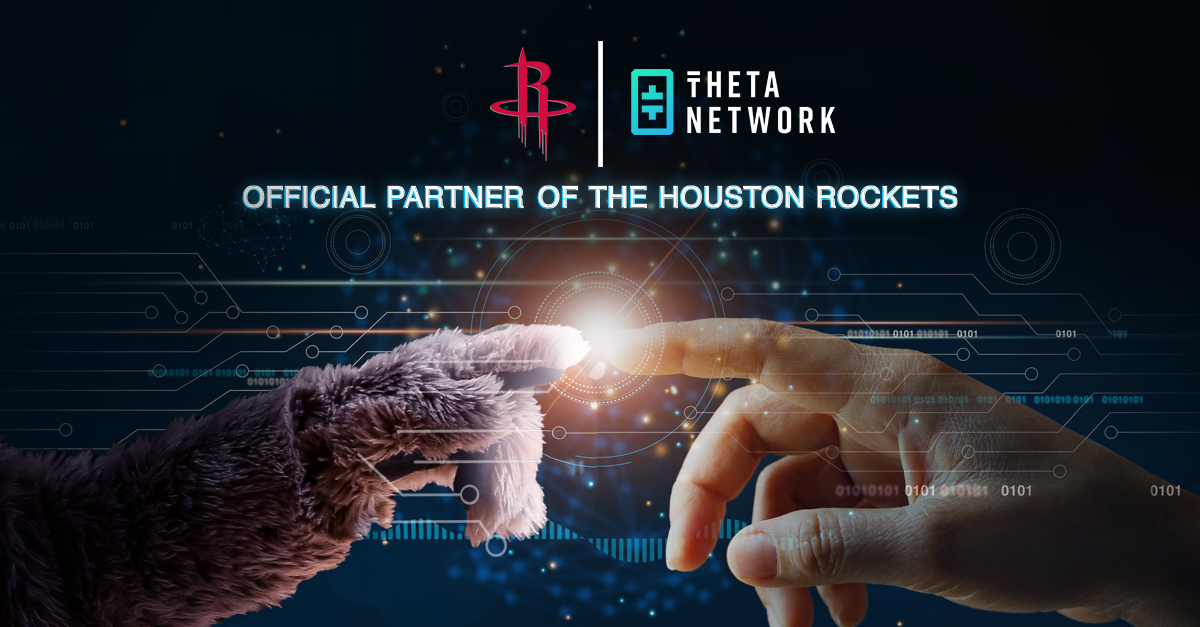
Theta Labs and Houston Rockets Launch AI-Powered Mascot 'ClutchBot'
Theta Labs, a prominent provider of decentralized cloud infrastructure, has partnered with the Houston Rockets to introduce an innovative AI-powered mascot named "ClutchBot." This digital mascot is designed to enhance fan engagement by providing real-time information about the team, including game schedules, ticket details, player statistics, and venue information. Fans can interact with ClutchBot through the official Houston Rockets website, asking questions like "When is the next game?" or "How many championships have the Rockets won?" The AI is trained on extensive Rockets and NBA data, ensuring accurate and timely responses.
The collaboration between Theta Labs and the Houston Rockets aims to create a more immersive fan experience that transcends traditional engagement methods. By utilizing Theta's cutting-edge EdgeCloud technology, ClutchBot represents a significant advancement in how sports teams can maintain continuous, personalized interaction with their fans. This initiative not only enhances the digital experience for fans but also sets a new standard for fan engagement across professional sports, allowing supporters to feel more connected to their favorite teams.
Scheduled to launch in the fall of 2025, ClutchBot will be accessible to fans worldwide, marking a pivotal moment in the intersection of sports and AI technology. As noted by Houston Rockets President Gretchen Sheirr, this partnership will enable the team to offer a more engaging and personalized experience through their digital platforms. With backing from industry giants and a robust decentralized infrastructure, Theta Labs continues to lead in the realm of AI and media, paving the way for future innovations in sports technology.
8 months ago
CUDOS Intercloud: Pioneering Sustainable Computing for AI
CUDOS Intercloud is pioneering a new era of sustainable computing as part of the Artificial Superintelligence Alliance. The company aims to redefine the landscape of AI infrastructure by focusing on green computing practices. On April 24, 2025, CUDOS will participate in the Peace One Day #Ai2Peace event, where CEO Matt Hawkins and VP of Sales Pete Hill will discuss the importance of distributed AI infrastructure in fostering a peaceful and sustainable future. This initiative highlights the necessity of building a fair and open AI ecosystem that prioritizes environmental responsibility.
Traditional cloud computing has a significant environmental impact, with a single 1MW data center consuming millions of kilowatt-hours of electricity and vast quantities of water annually. The carbon footprint of such centralized infrastructures is immense, as evidenced by Google’s data operations consuming 27 terawatt-hours of energy in 2024 alone. CUDOS Intercloud addresses these inefficiencies by utilizing existing data centers, optimizing their capacity without the need for additional resources. This approach not only reduces costs but also minimizes the carbon footprint associated with new infrastructure development.
CUDOS Intercloud is committed to sustainability at its core, operating on 100% renewable energy and ensuring that its GPU-focused clusters utilize sustainable practices. The company has already saved significant costs by maximizing the efficiency of existing data centers and redirecting wasted energy into productive use. By joining initiatives like the Stripe Climate program and committing resources to carbon removal projects, CUDOS is not just making claims about sustainability but is actively working towards a greener future. This commitment positions CUDOS as a viable alternative to traditional Big Tech, promoting a distributed and environmentally friendly approach to cloud computing.

8 months ago
AI: The Next Frontier in Sports Fandom
Artificial intelligence (AI) is making significant inroads into various industries, but according to Mitch Liu, CEO of Theta Labs, the sports fandom sector represents a particularly promising frontier. Unlike other fields where AI primarily automates tasks, sports offer a unique opportunity for AI to enhance the fan experience. With structured data such as statistics, schedules, and performance metrics, AI can analyze and present information in ways that resonate with fans. The cyclical nature of sports seasons allows for continuous data collection and feature testing, making it an ideal environment for AI integration.
Recent studies indicate that AI is already transforming the sports landscape through improved analytics and personalized fan interactions. For instance, the NFL's Digital Athlete program utilizes machine learning to assess player data and predict injury risks, which not only safeguards athletes but also enriches fans' understanding of the game. Additionally, NHL teams like the Vegas Golden Knights and New Jersey Devils have partnered with Theta Labs to create AI-powered chatbots that assist fans with inquiries about games, tickets, and team news. These innovations are enhancing the fan experience by providing timely, accurate information through interactive platforms.
The potential for AI in sports extends beyond traditional leagues to esports, where digitally native environments offer even greater opportunities for engagement. AI can facilitate hyper-personalized experiences, catering to both casual and dedicated fans by providing tailored insights based on real-time game data. However, sports organizations must implement these technologies thoughtfully, ensuring they augment rather than replace the core emotional elements of fandom. As AI continues to evolve, the sports industry stands at the cusp of a transformative era, with the potential to redefine how fans interact with their favorite teams and enhance the overall experience of sports consumption.
8 months ago
Stanford's AI Research Lab Partners with Theta EdgeCloud for Enhanced Research
Stanford Engineering Assistant Professor Ellen Vitercik's AI research lab is set to leverage Theta EdgeCloud's hybrid cloud infrastructure to enhance its research in discrete optimization and algorithmic reasoning. This collaboration will enable the lab to utilize EdgeCloud's decentralized GPU, which offers scalable and high-performance computing power at a competitive cost. The integration of this technology is expected to significantly accelerate the training of AI models and facilitate advanced research initiatives. Other prominent academic institutions, such as Seoul National University, KAIST, and the University of Oregon, are also utilizing EdgeCloud's infrastructure to boost their AI research productivity.
Ellen Vitercik specializes in machine learning, algorithmic reasoning, and the intersection of computation and economics. Her research lab is focused on several key areas, including the application of large language models (LLMs) for optimization, algorithmic content selection, and the generalization of clustering algorithms across various dataset sizes. By employing Theta EdgeCloud's resources, the lab aims to explore how AI can enhance decision-making processes in economic contexts, such as pricing strategies and targeted marketing.
Theta EdgeCloud's hybrid GPU infrastructure is designed to provide on-demand computing power that is both scalable and cost-effective, making it an ideal solution for academic research. The collaboration with Vitercik's lab exemplifies the growing trend of integrating advanced cloud computing technologies into academic research, particularly in the field of AI. This partnership not only promises to advance Vitercik's research objectives but also contributes to the broader landscape of AI research across multiple institutions worldwide.
8 months ago
Phala Network and Streamr Join Forces to Revolutionize Decentralized AI
Phala Network and Streamr have announced an exciting new partnership aimed at revolutionizing the landscape of decentralized AI. This collaboration merges Phala's trusted computing infrastructure with Streamr's decentralized, real-time data streaming capabilities. The goal is to create a new class of AI agents that can process live data securely and privately, without relying on centralized intermediaries. By combining these technologies, the vision of real-time, decentralized AI is becoming a reality, paving the way for innovative applications in various sectors.
Streamr operates on a decentralized network specifically designed for real-time data streaming, utilizing a peer-to-peer architecture and a publish/subscribe model. This structure allows data producers to broadcast streams that can be instantly consumed by applications and nodes, significantly reducing latency and enhancing resilience. The integration of blockchain technology within Streamr supports monetization and access control through its native DATA token, fostering a robust open data economy for Web3 applications. This partnership emphasizes a shared mission to create a more open and user-controlled web, moving away from reliance on traditional cloud services.
The collaboration leverages Phala's Trusted Execution Environments (TEEs) and Phat Contracts, which provide secure, encrypted enclaves for AI computations. This ensures that even the machine's owner cannot access the data or logic, creating a strong foundation for verifiable AI computation. By integrating Streamr's real-time data delivery with Phala's secure compute layer, developers can create AI systems that process live data while preserving privacy and resisting censorship. This partnership not only showcases the potential of decentralized infrastructure but also opens new avenues for developers to build innovative AI solutions aligned with the core values of Web3—privacy, transparency, and decentralization.

8 months ago
Fartcoin: The Surprising Rise of a Memecoin in Solana's AI Sector
In the ever-evolving cryptocurrency landscape, few tokens have garnered as much attention as Fartcoin, a Solana-based AI memecoin. Despite its nascent status, Fartcoin has established a notable presence on social media platforms, particularly Twitter, where it is perceived as a buy signal by savvy investors. This Belarus-born memecoin has quickly positioned itself as a frontrunner within the Solana ecosystem, outpacing many of its more established competitors. With a market cap of $455.2 million, Fartcoin now commands 32.1% of the total market cap of AI tokens on Solana, which stands at approximately $1.1148 billion across 772 projects.
Fartcoin's rise is particularly remarkable given that it lacks the typical utility or technological claims associated with many AI tokens. Instead, it has leveraged the current enthusiasm surrounding artificial intelligence to carve out a significant niche in the market. Its performance has eclipsed that of established tokens like #ai16z, with Fartcoin's market cap exceeding that of its nearest competitor by nearly 250%. This unexpected success raises questions about the future of AI tokens on the Solana blockchain, suggesting a potential shift in investor interest towards lighter, meme-based projects over more traditional tech-heavy solutions.
The appeal of Fartcoin among institutional investors, often referred to as "smart money," is a key driver of its success. These investors are drawn to Fartcoin's unique position in the market, where its meme culture and community engagement have proven to be powerful assets. As Fartcoin continues to attract significant investment and attention, its future remains uncertain, but its current trajectory indicates that it has established itself as a formidable player in the AI sector on Solana. Ultimately, Fartcoin exemplifies the unpredictable nature of the cryptocurrency world, where even a memecoin can dominate a market segment traditionally reserved for more serious projects.
Signup for latest DePIN news and updates